
 Call us today! 404-835-9000
 Join our Summer Camp
 Support Cumberland
Understanding Twice Exceptional Students and How Cumberland Academy of Georgia Supports Them in Atlanta
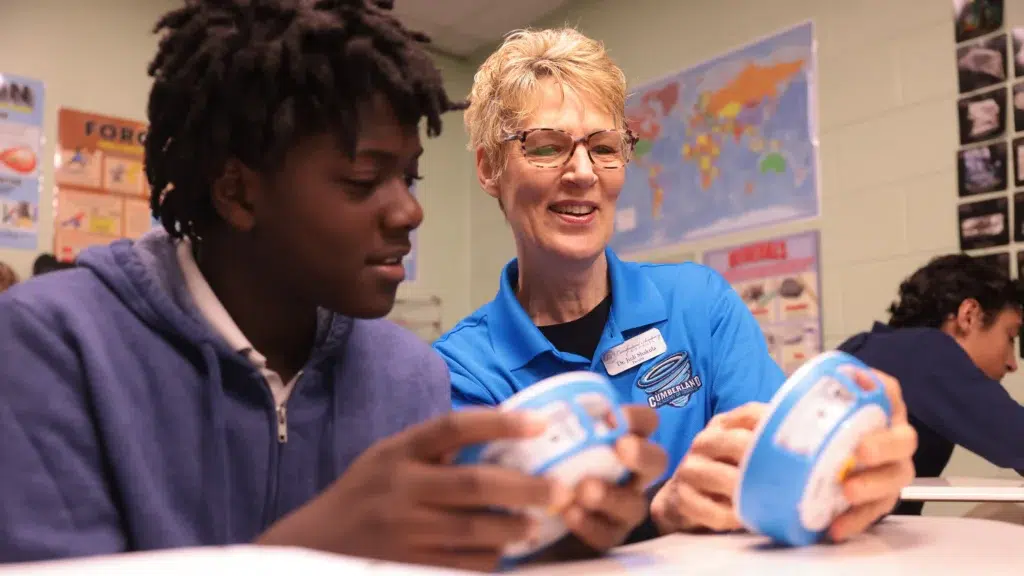
If you’ve ever watched your child breeze through a complex math problem one moment and feel overwhelmed by a homework assignment the next, you may wonder why. This contrast may be familiar to families of twice exceptional learners.
Twice exceptional students, often called 2e learners, are intellectually gifted or talented in one or more areas and also have a learning difference or disability. This is one of the most misunderstood learning profiles, making it especially important for parents, teachers, and schools to understand both sides of your child’s needs.
This guide explains what twice exceptional students need, why their strengths and challenges are so often missed, and what to look for in a supportive school environment. You’ll also learn how Cumberland Academy of Georgia, a fully accredited Atlanta school for students in grades 3 to 12, supports 2e learners.
What You Will Learn About Twice Exceptional Students:
- What “twice exceptional” means and why gifted students with learning differences are so often missed
- The traits that show up again and again in 2e learners
- Why a small, flexible school environment matters in twice exceptional education
- How Cumberland Academy of Georgia supports 2e learners, from honors coursework to college and career planning
What Are Twice Exceptional Students?
Twice exceptional, often shortened to 2e, describes students who are intellectually gifted or talented in one or more areas and who also have a learning difference or disability, such as ADHD, dyslexia, autism, dysgraphia, or a specific learning disability. These two exceptionalities exist side by side, and each can mask the other. A 2e student’s giftedness can hide their struggles, making it look like they’re simply not trying hard enough. At the same time, their learning differences can mask their strengths, causing their abilities to go unnoticed or underdeveloped.
This mismatch, sometimes called asynchronous development, is at the heart of why 2e students are so often misunderstood. Your child might read three grade levels ahead but find organizing a two-paragraph essay difficult. Or they might enjoy solving advanced logic puzzles while finding a standard classroom lecture hard to follow.
Without understanding this learning profile, adults may not recognize the support your child needs to participate and show what they know. Your child is navigating real strengths and real challenges at the same time, and both deserve attention.
What Traits Do Twice Exceptional Students Have in Common?
While every twice exceptional learner is different, some patterns show up again and again:
- Strong verbal reasoning or creativity paired with difficulty with executive functioning (organization, time management, task initiation)
- Deep, intense curiosity about specific topics alongside difficulty with more routine academic tasks
- A tendency toward perfectionism, anxiety, or frustration when their inner sense of their own ability doesn’t match their output
- Uneven academic performance, excelling in one subject while needing more support in another
- Social challenges that stem not from a lack of interest in others, but from differences in communication or sensory processing
Because their strengths and challenges can mask one another, 2e students are frequently under-identified. Your child may not qualify for gifted services if their grades do not reflect their abilities. They may also miss out on learning support if their average test scores do not show where they need help.
When neither side of their learning profile is fully recognized, your child can begin to lose confidence. Understanding both their abilities and their support needs helps explain why this gap matters.
Twice Exceptional Students at a Glance
| Common 2e pattern | What helps at school |
|---|---|
| Strong ideas alongside difficulty with organization | Executive functioning coaching |
| Deep interest in specific topics | Honors courses and project-based learning |
| Strong in one subject, needs more support in another | Ability grouping and differentiated instruction |
| Frustration when output falls short of ability | Small classes where teachers notice strengths and struggles |
| Social differences | Social skills built into the school day |
What Kind of School Environment Do 2e Students Need?
For twice exceptional students, a one-size-fits-all classroom rarely works. Your child needs an environment that recognizes two equally important truths: they need support, and they have real strengths worth developing.
That means small class sizes, teachers trained to recognize both giftedness and learning differences, and a flexible curriculum. Learning should meet your child where they are, rather than expecting them to follow the same pace in every subject.
If you’re searching for a twice exceptional school in Atlanta, you may also want to understand how the school provides social skills support throughout the school day. Social challenges are common among 2e students, so this support can be an important part of your child’s school experience.
How Does Cumberland Academy of Georgia Support Twice Exceptional Learners?
Cumberland Academy of Georgia, founded in 2007 and located in Atlanta, was built specifically for neurodiverse students, including those with ADHD, autism, and other learning differences, many of whom are twice exceptional. A few of the ways the school is structured to meet 2e students where they are:
Small classes and a low student-teacher ratio
With a student-teacher ratio around 5:1, teachers have the time to notice both your child’s strengths and the areas where they need support. This helps keep both parts of their learning profile in view.
Ability grouping and differentiated instruction
Rather than assuming every student in a grade level needs the same pacing, Cumberland groups students by ability and tailors instruction. Your child can move forward in areas where they are advanced while receiving extra support where they need it.
Honors-level enrichment
If your child is ready for more challenges, Cumberland offers honors coursework, including Honors Pre-Calculus, Honors U.S. History, and Honors Algebra. These courses give their strengths room to develop, even when they need learning support in other areas.
Project-based learning
The school’s Honors U.S. History course integrates project-based learning, an approach that tends to work especially well for neurodiverse students because it lets them engage with material through their strengths (research, building, presenting, creating) rather than through a single standardized format.
A hands-on, multi-modal approach to core subjects
In math courses like Algebra, Geometry, and Pre-Calculus, students use print and digital resources, with tactile, hands-on opportunities alongside more traditional instruction. If your child needs a different way into a concept, these approaches offer ways to engage beyond a lecture alone.
Certified special education teachers
Every student is taught by staff trained to understand learning differences, so accommodations aren’t an afterthought. They’re built into how the school operates.
Social skills and life skills development
Your child’s social and emotional needs matter alongside their academic growth. Because 2e students often face challenges in these areas, Cumberland weaves social pragmatic skill-building into the school day, supporting social communication as well as academics.
Cumberland Cares
Through this monthly community outreach program, students volunteer at local organizations, beautifying parks, packing food for students facing food insecurity, and supporting a local nursing home, giving students real-world purpose and a chance to build confidence outside the classroom.
Creating Futures college and career readiness
As your child prepares for life after graduation, Creating Futures offers older students personalized college touring, one-on-one counseling on accommodations, and individual guidance on college applications. This gives twice exceptional students a clear, supported path as they plan their next steps.
The Bigger Picture for Twice Exceptional Students
Your child’s strengths and support needs are not a contradiction. Both are real, and both deserve to be taken seriously. The right environment does not ask your child to hide their challenges to prove their abilities, or hide their abilities to receive support.
Schools like Cumberland Academy of Georgia show what’s possible when education is built around that understanding. Your child can be exceptional in more ways than one, and deserves an education that recognizes the whole of who they are.
Frequently Asked Questions
Who can I contact with questions about whether Cumberland Academy of Georgia is right for my child?
Contact Cumberland Academy of Georgia’s admissions team to discuss your child’s strengths, learning needs, and school goals. You can ask about academic challenge, classroom support, and eligibility before deciding whether to take the next step.
How can I schedule a tour of Cumberland Academy of Georgia?
Visit Cumberland Academy of Georgia’s Visit Us page to arrange a campus tour and informational meeting with the admissions director. Bring questions about your child’s learning needs so you can discuss them while seeing the school’s classrooms and learning environment.
How can I arrange a shadow day for my child?
Ask Cumberland Academy of Georgia’s admissions team about arranging a full academic shadow day, offered Monday through Thursday. Before the visit, confirm the required documents and complete the online application packet so your child can experience a school day as part of the admissions process.
See How Cumberland Academy of Georgia Supports Twice Exceptional Learners in Person
Cumberland Academy of Georgia attracts neurodiverse students from Atlanta and beyond, pairing honors-level coursework with small classes, trained teachers, and social skills support. On a tour, you can visit classrooms and see how teachers and students interact. A shadow day gives your child an opportunity to experience a day in the life of the school.
Schedule a campus tour or shadow day with the admissions team, call (404) 835-9000, or visit cumberlandacademy.org to learn more about the school’s programs. The campus is at 650-A Mt. Vernon Highway NE, Atlanta, GA 30328.

Debbi Scarborough
From 2007 to present, Debbi Scarborough has been the Headmaster and served on the Board of Directors for this non-profit, special needs school that focuses on children with ASD, ADD, and ADHD. Debbi and her husband Matthew founded Cumberland Academy of Georgia after a frustrating battle of searching for the right school for their son Steven who has ASD. She has built the academy from one student to now over 100, and continues to run the day to day operations.Related Posts
Cumberland Academy of Georgia Celebrates Atlanta Dream Spirit Day
Cumberland Academy of Georgia will celebrate Atlanta’s WNBA team, the Atlanta Dream, with a school-wide Atlanta Dream Spirit Wear Day....
READ POST
Understanding Twice Exceptional Students and How Cumberland Academy of Georgia Supports Them in Atlanta
If you’ve ever watched your child breeze through a complex math problem one moment and feel overwhelmed by a homework....
READ POST
Cumberland Academy of Georgia Celebrates 20 Years of Empowering Students with Learning Differences in Atlanta
Cumberland Academy of Georgia is celebrating 20 years as a school for students with learning differences in Atlanta. Founded in....
READ POST